

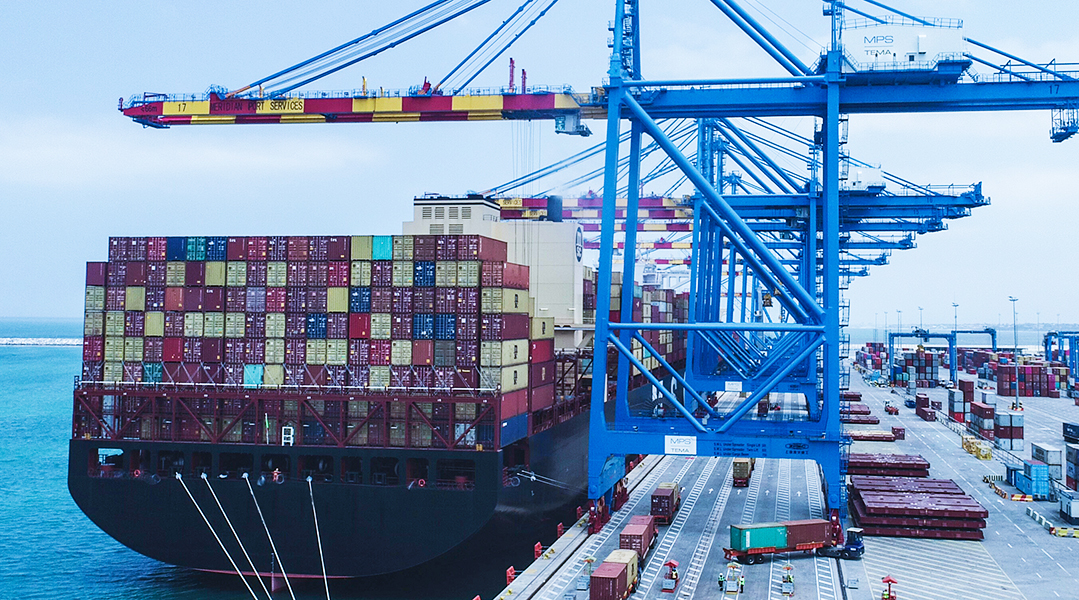

Ghana’s export trade flow surged in the fourth quarter of 2025, driving a sharp expansion in the country’s trade surplus as strong commodity prices and demand from Asian markets lifted shipment values.
According to the latest international trade newsletter from the Ghana Statistical Service, exports reached GH₵108.6 billion in Q4 2025, far outpacing imports of GH₵61.4 billion and resulting in a trade surplus of GH₵47.2 billion, a significant jump from GH₵17.5 billion in the previous quarter.
“This represents a substantial increase from the GH₵17.5 billion surplus recorded in Q3 2025,” the report said, highlighting the scale of the improvement in Ghana’s external trade balance.
Also read: Israeli Ambassador apologises over unwarranted attack on Ghanaian peacekeepers
In dollar terms, total trade stood at US$15.1 billion, with exports contributing US$9.7 billion, reinforcing the central role of export flows in the country’s economic performance.
The export boom was largely driven by commodity shipments, with gold bullion valued at GH₵72.7 billion, accounting for 66.9% of total exports.
“Gold bullion was the top export product worth more than seven times the value of the second-highest export,” the report noted, underscoring Ghana’s continued dependence on the precious metal.
Cocoa beans and crude petroleum followed as key export earners, though at significantly lower levels, pointing to a highly concentrated export structure.
Geographically, export flows were heavily skewed toward Asia, which absorbed 53.4% of Ghana’s total exports, more than double Europe’s share.
India and the United Arab Emirates emerged as Ghana’s top markets, jointly accounting for nearly half of export revenue.
“Asia led with over half (53.4%) of total exports,” the report stated, highlighting the region’s dominance in Ghana’s trade network.
Despite the strong nominal performance, the data suggest that the export boom was largely price-driven. When adjusted for price changes, Ghana recorded a real trade deficit, with exports at GH₵30.0 billion and imports at GH₵31.7 billion.
“The growth in total export value is driven primarily by increases in the unit price rather than by higher quantities exported,” the report explained, particularly in relation to gold exports.
Export prices rose sharply during the quarter, with the export unit value index increasing by 23.2% quarter-on-quarter, largely reflecting higher gold prices, while import prices remained relatively stable.
Regionally, Ghana continued to expand trade within Africa, maintaining a surplus with the continent since late 2024. Exports to African countries reached their highest level in Q4 2025, led by South Africa.
“Ghana’s trade with African countries has expanded steadily,” the report noted, pointing to the impact of regional integration efforts such as the African Continental Free Trade Area (AfCFTA).
However, the report cautioned that Ghana remains vulnerable to external shocks due to its heavy reliance on a narrow range of commodities and limited trading partners.
It recommended stronger efforts to diversify exports, promote value addition, and deepen regional trade integration to sustain gains from the current export-led growth while reducing exposure to global commodity price swings.
CNR