

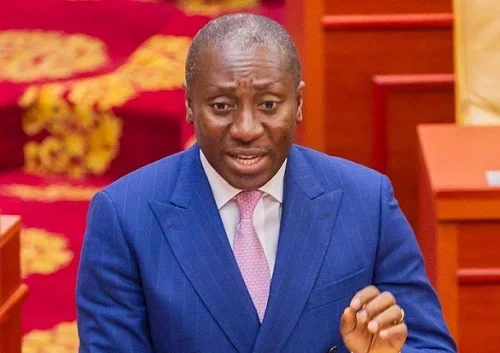

The leadership journey and public service record of Minority Leader in Parliament, Alexander Kwamena Afenyo-Markin, came into sharp focus during the Osahen Excellence Public Lecture held at the University of Education, Winneba, under the theme, “Selfless Leadership and Public Service: Building Integrity, Trust and Accountability.”
Delivering the lecture, Dr. Mark Assibey-Yeboah emphasized that Ghana’s democratic progress depends on leaders who place service above personal ambition and uphold the principles of integrity, accountability, and transparency.
Addressing traditional leaders, politicians, religious leaders, students, and members of the public, Dr. Assibey-Yeboah noted that modern democracies face growing challenges as citizens increasingly question whether public office still represents service and sacrifice.
Also read: Akufo-Addo Administration laid groundwork for E-Visa system – Abu Jinapor
According to him, leadership should not be viewed as a privilege but as a responsibility entrusted to individuals for the benefit of society.
“Leadership is not about occupying office; it is about stewardship. It is about the ability to inspire confidence, unite people around a common purpose, and remain accountable even when authority provides the opportunity to do otherwise,” he stated.
The former Member of Parliament stressed that selfless leadership requires integrity, courage, humility, and accountability, arguing that public trust remains one of the most valuable assets of any leader.
Dr. Assibey-Yeboah described public service as a sacred responsibility that demands honesty, transparency, and a genuine commitment to improving the lives of citizens.
Speaking on the career of Hon. Afenyo-Markin, he traced the Effutu MP’s journey from humble beginnings in Winneba, where he supported his family through bread-selling activities, to becoming a lawyer, entrepreneur, traditional leader, and one of Ghana’s most influential parliamentarians.
He noted that Afenyo-Markin’s rise through Parliament – from Member of Parliament to Deputy Majority Leader, Majority Leader, and now Minority Leader – demonstrates perseverance, resilience, and dedication to democratic governance.
The lecture also highlighted Afenyo-Markin’s contributions to parliamentary oversight, institutional strengthening, and accountability in governance. Dr. Assibey-Yeboah said the Minority Leader has consistently advocated stronger institutions and parliamentary scrutiny of government programmes and expenditure.
Beyond politics, the speaker underscored the importance of culture and traditional leadership in nation-building, praising Afenyo-Markin’s role as Osahen of the Effutu Traditional Area and his efforts in promoting unity through cultural heritage, particularly the annual Aboakyer Festival.
Dr. Assibey-Yeboah challenged young people to embrace values-driven leadership, stressing that education alone is insufficient without character, discipline, integrity, and commitment to service.
He urged the youth to reject the notion that leadership is defined by status, wealth, or popularity, insisting that true leadership is measured by responsibility and impact.
He reminded participants that while political office is temporary, a leader’s legacy endures through the values they uphold and the institutions they strengthen.
“Leadership is temporary, but legacy is permanent. Integrity endures. Long after leaders leave office, society remembers whether leadership united or divided people, strengthened or weakened institutions, and served citizens or personal interests,” he said.
The event brought together traditional authorities, religious leaders, Members of Parliament, academics, students, and residents of Effutu to reflect on the role of ethical leadership in Ghana’s democratic development.