

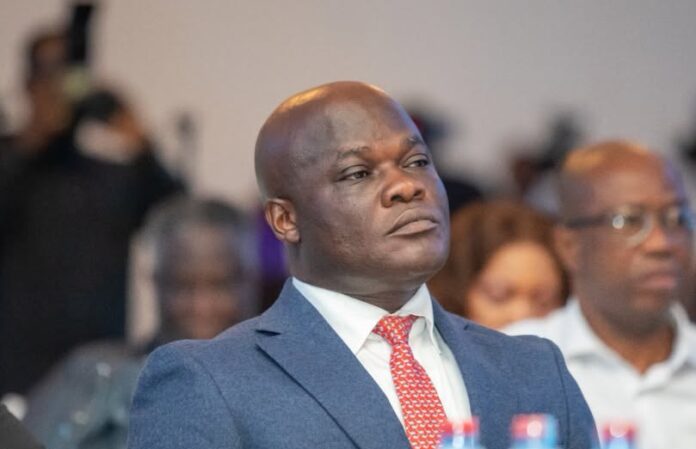

Minister for Local Government, Chieftaincy and Religious Affairs and Member of Parliament for Banda, Ahmed Ibrahim, has outlined a comprehensive government strategy aimed at tackling witchcraft accusations and protecting vulnerable persons from stigma, violence, and social exclusion.
The Minister disclosed the measures on the floor of Parliament on Thursday while responding to a question from the Member of Parliament for Kumawu, Ernest Yaw Anim, regarding efforts being undertaken to secure the support of chiefs and community stakeholders in addressing the growing challenge of witchcraft accusations.
Ahmed Ibrahim acknowledged that witchcraft accusations remain a serious social problem in parts of the country, often affecting women, children, and the elderly, leading to discrimination, abuse, and forced displacement.
Also read: Ghana TVET revolution: Dr. Fred Kyei champions German-style skills transformation plan
He noted that although the proposed Private Member’s Bill on Witchcraft Accusations, sponsored by Madina MP Francis-Xavier Sosu, is yet to be passed into law, the government is taking proactive steps to build public support and strengthen community engagement ahead of its anticipated enactment.
“The phenomenon of witchcraft accusations remains a pressing social challenge in our country, often resulting in stigma, violence, and exclusion of vulnerable groups, especially women, children, and the elderly,” the Minister stated.
According to him, the Ministry has set a target this year to review existing sub-regional laws relating to witchcraft accusations to ensure that Ghana’s legal framework aligns with international human rights standards.
He explained that chiefs, traditional rulers, and religious leaders are central to the success of any intervention because of their influence within local communities.
“Chiefs and traditional leaders are custodians of culture and authority in their communities. Their support is critical in reshaping attitudes, preventing harmful practices and promoting reconciliation,” he said.
As part of the government’s strategy, the Ministry will engage chiefs, religious leaders, and community stakeholders in nationwide dialogue on the dangers associated with witchcraft accusations and the need to protect victims.
The Ministry also plans to integrate the perspectives of traditional authorities into the review of existing laws and the proposed legislation to ensure broad acceptance and effective implementation.
Ahmed Ibrahim revealed that collaboration with the Ministry of Gender, Children, and Social Protection will be strengthened to provide shelters, psychosocial support, and other protection services for victims of witchcraft accusations, domestic violence, child trafficking, and child marriage.
In addition, community-based protection mechanisms involving traditional authorities and faith-based organisations will be promoted to prevent violence and safeguard vulnerable groups.
The Minister expressed optimism that the interventions would encourage chiefs, traditional councils and religious organisations to publicly denounce witchcraft accusations while helping to reduce incidents of stigma, violence and discrimination.
The government, he said, also expects stronger collaboration between ministries, traditional institutions, and civil society organisations, leading to improved reintegration and protection of victims.
Ahmed Ibrahim called on Parliament, traditional leaders, faith-based organisations, and civil society groups to unite in ending witchcraft accusations and building a society that upholds dignity, compassion, and justice for all.
“Let Ghana be known not for exclusion and fear, but for dignity, compassion, and justice for all,” he urged.