

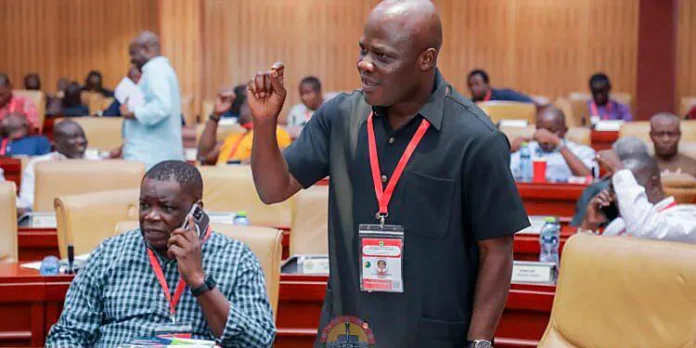

Minister of Local Government, Chieftaincy and Religious Affairs, Ahmed Ibrahim, has outlined measures aimed at fostering stronger working relationships between Members of Parliament (MPs) and Metropolitan, Municipal and District Chief Executives (MMDCEs) to enhance governance and accelerate development across local assemblies.
According to the Minister, effective collaboration between the two groups remains critical for ensuring that development priorities are properly identified, funded, and implemented for the benefit of local communities.
He explained that the distribution of the District Assemblies Common Fund (DACF), as provided for under Article 252 of the 1992 Constitution, is guided by key principles, including need, equality, and service pressure, ensuring that resources are allocated fairly and efficiently across Metropolitan, Municipal, and District Assemblies (MMDAs).
Also read: Ahmed Ibrahim pushes community-led solutions to end witchcraft stigma
Hon. Ahmed Ibrahim disclosed this in response to a question from the Member of Parliament for Kwadaso, Prof. Kingsley Nyarko, on how the Ministry intends to improve cooperation between MPs and MMDCEs.
He noted that Members of Parliament already play an important role in local governance through their participation in General Assembly meetings, where they contribute to discussions on development priorities and resource allocation.
The Minister highlighted the significance of the MPs Common Fund, which supports small-scale projects and social interventions such as assistance to vulnerable persons, provision of agricultural inputs, boreholes, and community water facilities.
To improve coordination, the Ministry is encouraging MMDCEs to hold regular consultations with their respective MPs to discuss pressing community needs, align development interventions with Assembly Medium-Term Development Plans, and identify appropriate funding sources for priority projects.
“These engagements form a vital platform for strengthening the working relationship between MMDCEs and Honourable Members of Parliament and for improving coordination of development efforts at the local level,” the Minister stated.
As part of the new measures, the Ministry is strengthening protocols requiring MMDCEs to notify and brief MPs on key planning, budgeting, and development committee meetings to ensure constituency priorities are adequately reflected in local development plans.
The initiative is also expected to promote joint monitoring of projects and enhance public accountability in the use of development resources.
Ahmed Ibrahim disclosed that the Ministry has been facilitating collaborative engagements on major government programmes, including the recently introduced 24-Hour Economy Model Markets initiative.
He cited a national orientation programme organised for Regional Ministers and MMDCEs as an example of efforts to improve stakeholder coordination, implementation planning, and financing arrangements for strategic development interventions.
The Minister stressed that local assemblies are being encouraged to actively involve MPs in consultations surrounding the implementation of such programmes to ensure broader stakeholder participation and community ownership.
He expressed confidence that stronger cooperation between MPs and MMDCEs would result in improved service delivery, more efficient use of public resources, and accelerated development at the grassroots level.
The Minister stressed that enhanced collaboration, transparency, and communication between local government actors will ultimately strengthen decentralisation and contribute significantly to Ghana’s socio-economic development agenda.