

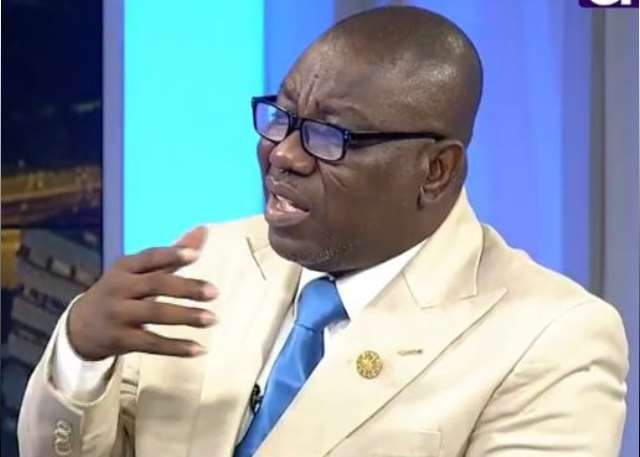

The Member of Parliament for Bolgatanga Central has accused the opposition of misleading Ghanaians over claims that the government has reintroduced the controversial Electronic Transfer Levy (E-Levy).
No such tax, he said, has been brought before Parliament.
The MP stressed that allegations by the Minority regarding the purported new levy on mobile money transactions were inaccurate and intended to create public anxiety.
The comments came during a parliamentary debate on Ghana’s transition from the IMF Extended Credit Facility programme to a Policy Coordination Instrument (PCI), which the government says will help consolidate economic reforms and maintain fiscal discipline.
Also read: Free SHS suppliers to picket at Education Ministry over GH¢50m debt
He challenged assertions that a new E-Levy had been introduced, stressing that levies can only be imposed through parliamentary approval and not by administrative correspondence from regulatory institutions.
“The leader of the Minority should know that levies are imposed by Parliament. They are not imposed through a letter from an institution,” he stated.
He referred to a Bank of Ghana letter dated January 31, 2024, which he said granted a “no objection” to certain transaction fees, including charges on cash-out transactions and wallet-to-bank transfers.
According to him, the approval was granted during the previous administration and therefore cannot be attributed to the current government.
He accused the opposition of attempting to manufacture controversy where none exists.
“I want them to hold another press conference and apologise to the people of Ghana because deception and falsehood have no place in our governance,” he said.
The MP also defended the government’s economic record, arguing that the completion of the IMF ECF programme demonstrates growing stability in the economy.
Addressing concerns raised by the Minority over inflation and living conditions, he explained that inflation should be measured using the full basket of goods and services rather than isolated products.
“When you look at inflation, you don’t pick individual items. You consider the entire basket of goods and services. That is what shows whether prices are stabilising or not,” he noted.
He maintained that Ghanaians are already experiencing the benefits of economic recovery through improved exchange rate stability and easing price pressures.
“What is in it for the people of Ghana is that they are no longer buying a dollar at the levels we saw previously. That is what economic stability means for ordinary citizens,” he said.
The Bolgatanga Central MP also pointed to ongoing infrastructure projects across the country as evidence that the economy is recovering and public investment is increasing.
According to him, Ghana is making steady progress and should focus on sustaining the gains achieved under the IMF-supported programme rather than engaging in political misinformation.