


Speaker of Parliament, Rt. Hon. Alban Sumana Kingsford Bagbin, has expressed support for the progressive introduction of direct elections for Members of the Economic Community of West African States (ECOWAS) Parliament.
Describing the move as important to strengthening the regional legislature’s democratic legitimacy, the Speaker stressed that Parliament believes the future of regional integration must be anchored in stronger democratic participation by citizens of ECOWAS member states.
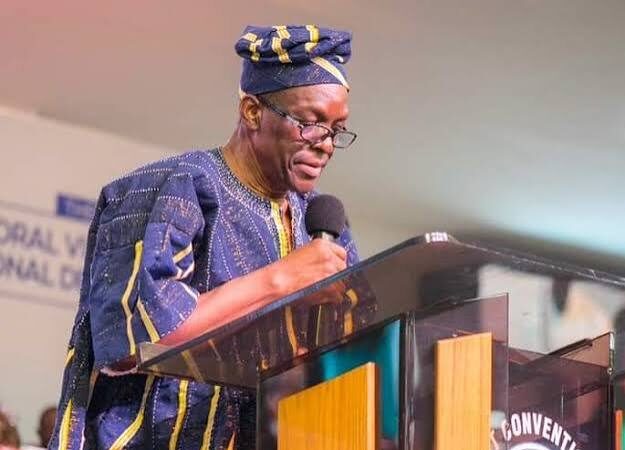
The position was contained in an address delivered on his behalf by the Second Deputy Speaker of Parliament, Andrew Asiamah, at the joint opening of the ECOWAS Parliament’s Second Parliamentary Seminar and Second Extraordinary Session in Accra.
Also read: ECOWAS warns climate change could displace 32 million people by 2050
The week-long programme is being held under the theme: “Climate Change, Environmental Degradation, Population Displacement and Growing Insecurity in the ECOWAS Region.”
The proposal comes as the ECOWAS Parliament seeks to strengthen its role in regional integration and ensure the concerns of citizens are effectively represented at the regional level.
Climate change and insecurity
Mr Asiamah said the theme of the seminar is particularly timely because West Africa faces a combination of interconnected environmental, economic and security challenges.
Climate change, he said, is disrupting weather patterns, intensifying floods and droughts, and increasing pressure on natural resources, while deforestation, pollution, environmental degradation and unsustainable exploitation of natural resources are weakening livelihoods and communities’ ability to withstand shocks.
He identified illegal small-scale mining, popularly known as galamsey, as one of the most serious environmental threats confronting the sub-region.
According to him, galamsey has consequences including water contamination, deforestation, habitat destruction, soil erosion, air pollution, biodiversity loss and health risks.
“These challenges threaten not only the environment but economic security and quality of life, and are best understood as mutually reinforcing phenomena demanding an integrated response,” he said.
The Second Deputy Speaker also warned that growing insecurity in the region could no longer be viewed solely through the traditional security lens.
Security, he said, must increasingly encompass human security, including protection of livelihoods, food systems and the environment.
Climate change, he noted, could intensify competition over scarce resources, while environmental degradation could drive migration and expose displaced populations to exploitation and human trafficking.
Parliamentary action
Mr Asiamah urged parliamentarians to focus on preventive measures and resilience-building rather than waiting for crises to occur.
According to him, legislators have a responsibility to translate the experiences of farmers, communities affected by floods and droughts, displaced persons and vulnerable young people into effective legislation and public policy.
He called for stronger laws and policies covering environmental governance, climate adaptation, disaster preparedness and natural-resource management.
Mr Asiamah stressed that individual ECOWAS member states cannot resolve the region’s environmental and security challenges on their own.
“Rivers cross national boundaries, ecosystems do not recognise political borders, and environmental crimes operate across jurisdictions, so our response must be regional,” he said.
He stressed financing as a critical requirement for implementing climate, environmental and security policies.
ECOWAS countries, he said, must strengthen their own capacity to finance sustainable development, climate adaptation, peace and security.
Opportunity for growth
Mr Asiamah averred that the transition towards a climate-resilient and sustainable West Africa cannot create opportunities for economic growth, employment and deeper regional cooperation.
According to him, West Africa possesses significant human and natural resources but requires political will and regional solidarity to harness them sustainably.
“The security and prosperity of one Member State are inseparable from that of the entire ECOWAS region,” he said.
The ECOWAS Parliament’s Second Parliamentary Seminar is expected to examine the links between climate change, environmental degradation, population displacement and insecurity, while identifying practical regional responses.
The Second Extraordinary Session will also deliberate on matters concerning the Community, including the proposed 2027 Budget of the ECOWAS Parliament.